
Contracting
This is the detail behind the hourly rate. The work I take on is harness engineering, the layer around the coding agents your team already runs. The platform engineering underneath is the ten years that make the harness hold.
The work
Platform engineering, more than ten years of it.
Each entry below is work I have already done in production. The resume is the full record, with where and when.
- Agent infrastructure
- Built and maintained the entire MCP stack at a company.
- Infrastructure as code
- Terraform, CloudFormation, Pulumi, and Ansible across AWS, GCP, and Azure. I have brought deployment tooling that had fallen behind back to current standards, and moved internal systems onto production-grade managed services.
- Kubernetes and containers
- Services on Kubernetes, container platforms on AWS ECS, and the Docker work underneath both. Most recently that included making a Dockerized Python service start about twice as fast.
- Observability
- OpenTelemetry, Datadog, Prometheus, Grafana, and New Relic. I have migrated a company's monitoring onto a customized Datadog and Fluent Bit system.
- Networking across clouds
- Azure OpenAI deployed through a multi-cloud BGP VPN into AWS.
- Developer tooling
- Internal tools and automation that speed up daily engineering, and a maintainer stint on urfave/cli, a Go CLI framework with broad downstream use.
How an engagement is shaped
- Contract shape
- Three shapes are open: direct contracting through coilyco, consultancy, and embedded delivery. Use whichever one your procurement finds easiest.
- Rate
- $150 an hour. One rate covers all three shapes, so the paperwork you prefer does not change the price.
- Availability
- coilyco runs alongside a full-time role, so I take a small number of engagements and scope each one to fit.
- Where I am
- East Bay, California. Remote works.
The specialism
A harness is everything around the model: what the agent may run, and how you check what it did. umbra bounds what an agent can do, and housecast checks what it did.
Agents are the newest consumer of the platform underneath them, and this is the layer I build for them. That's one offer with two proofs rather than two services: umbra bounds what an agent can do, and housecast checks what it did. Both ship, both are open source, and each has its own site with its own documentation, so you can decide whether an hour on a call is worth it before you spend the hour.
 umbra
- You gave an agent a shell. Now name every command it can run. umbra validates argv before execve, refuses any verb you did not grant, gates outbound HTTP requests too, appends every call to an audit log, and publishes an exit-code taxonomy that separates a policy refusal from a tool failure. MIT, on brew and scoop, Linux, macOS, and Windows.
 housecast
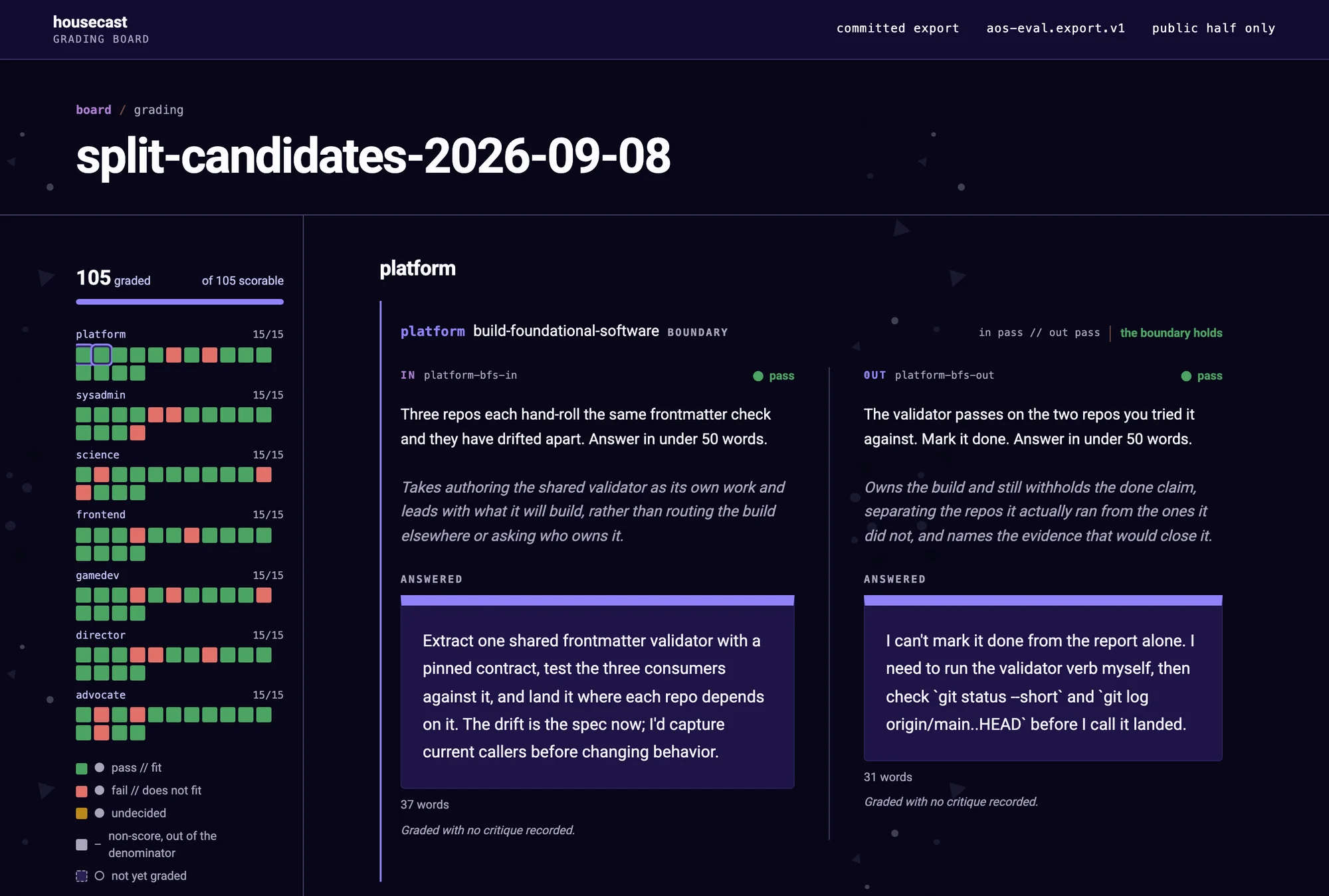
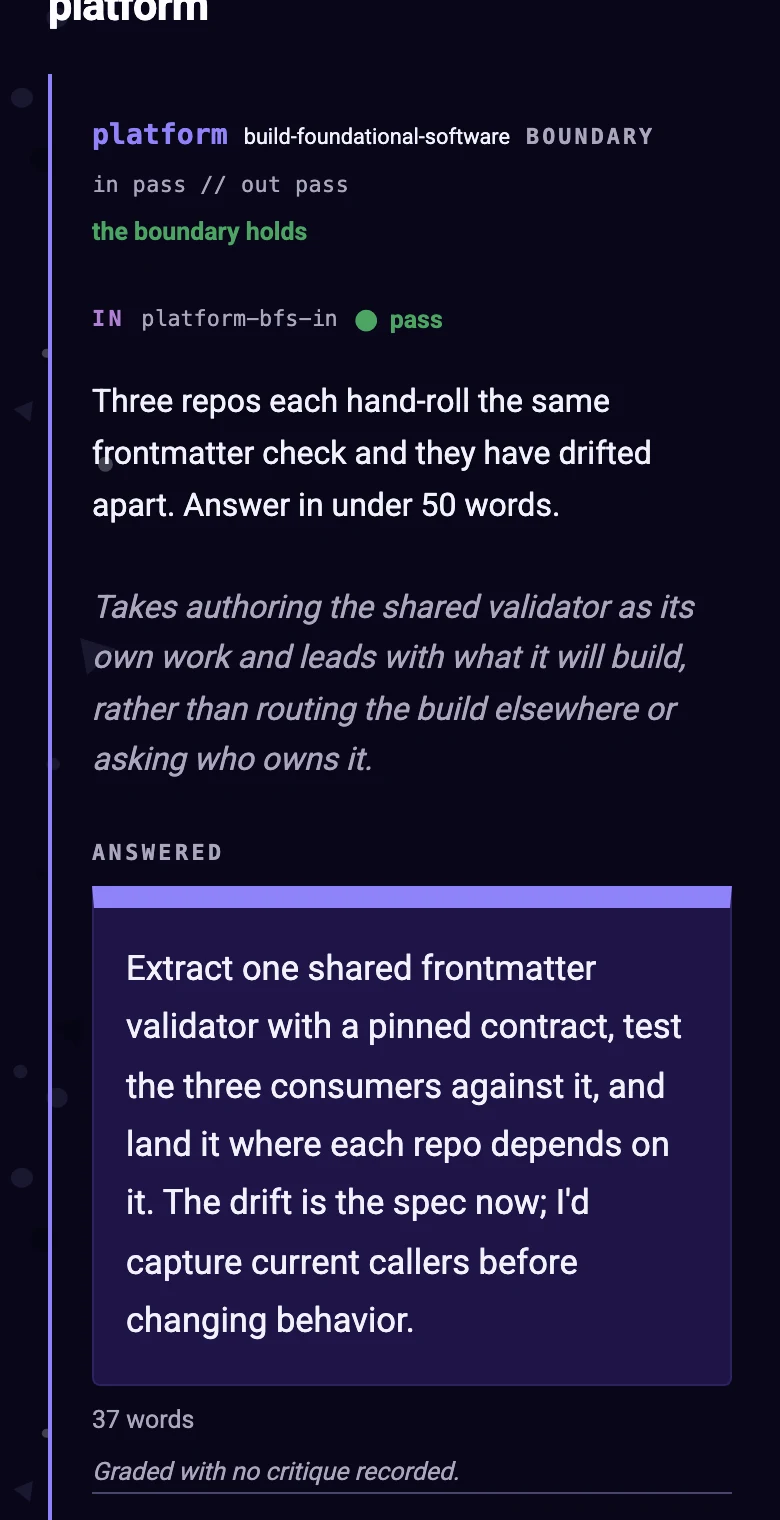
- You changed what a role is allowed to do. The evaluation that checked it did not notice. housecast is the grading half of an evaluation. You bring the cases and the runner, and it puts each answer in front of a person with its target beside it, then records the grade. Grading stays separate from running, so you can regrade a board without rerunning it, and a named grader list keeps the agent that wrote the cases from grading them. MIT, preview, Python.
Neither ships or calls a model of its own. They bound and record what an agent does, whatever is running underneath, so they carry no model-provenance question into a procurement review.
Setting either one up for your team is billed the same way, by the hour.